Three years running: Setting the standard for sustainable exhibition design at ERS
Three consecutive sustainability awards at ERS tell a bigger story than industry recognition. They demonstrate how sustainable exhibition design can reduce environmental impact while enhancing creativity, engagement, and visitor experience.
Discover the principles behind three years of award-winning sustainable exhibition design.
Winning an award once is gratifying. Winning it three years in a row suggests something more significant is happening.
At the European Respiratory Society (ERS) Congress, AstraZeneca and Emota have now been recognised with the award for the exhibition stand that best incorporates sustainability measures for three consecutive years. While the recognition itself is something to celebrate, the real achievement lies in what sits behind it: proving that sustainability can be embedded into every aspect of exhibition design without compromising creativity, engagement or experience.
ERS created the award to encourage exhibitors to rethink how congress booths are planned, built, operated and reused. Rather than prescribing a fixed set of sustainability rules, the initiative recognises organisations that demonstrate genuine efforts to reduce environmental impact across the full lifecycle of a stand, from planning and logistics through to construction, operation and end-of-life management.
That challenge has shaped our approach from the beginning.
The journey started with a simple question: how can we reduce waste and environmental impact while still creating a congress presence that delivers meaningful engagement?
The answer wasn’t a single sustainable material or isolated initiative. It required a different way of thinking about exhibition design altogether.
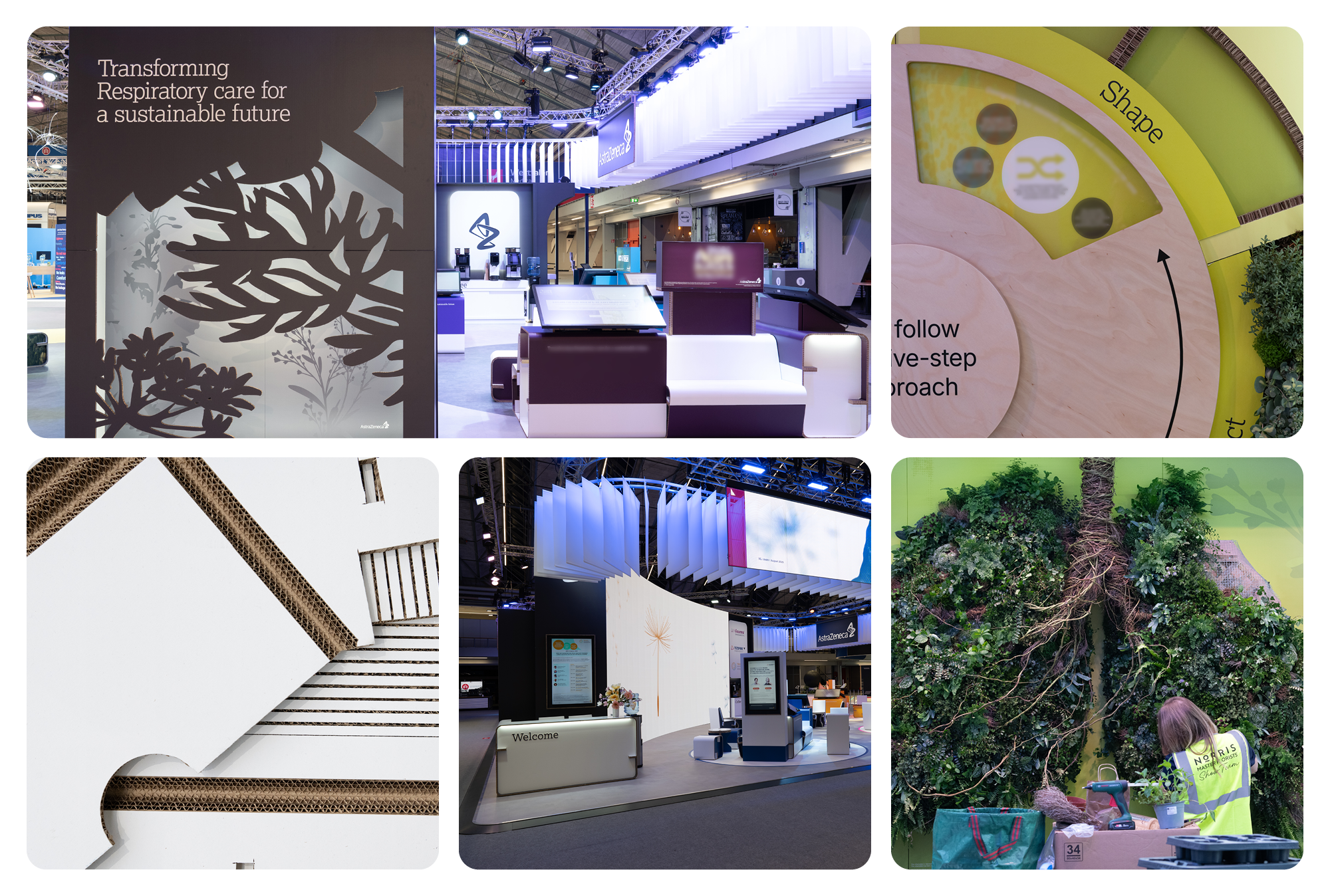
For ERS 2023, AstraZeneca and Emota developed a modular, reusable exhibition environment designed around circular principles. Sustainable material choices, including the innovative use of cardboard elements, were combined with optimised logistics and a focus on reuse and recovery. Every element was assessed through the lens of long-term value rather than single-event impact.
What made the 2024 award particularly meaningful was that it validated the model. Rather than creating a new stand, the team reinstalled and adapted the existing structure, demonstrating that sustainable exhibition design is most effective when it is planned for longevity. The booth achieved a 98% reduction in waste footprint compared with traditional approaches, with almost all materials reused, donated or repurposed after the event.
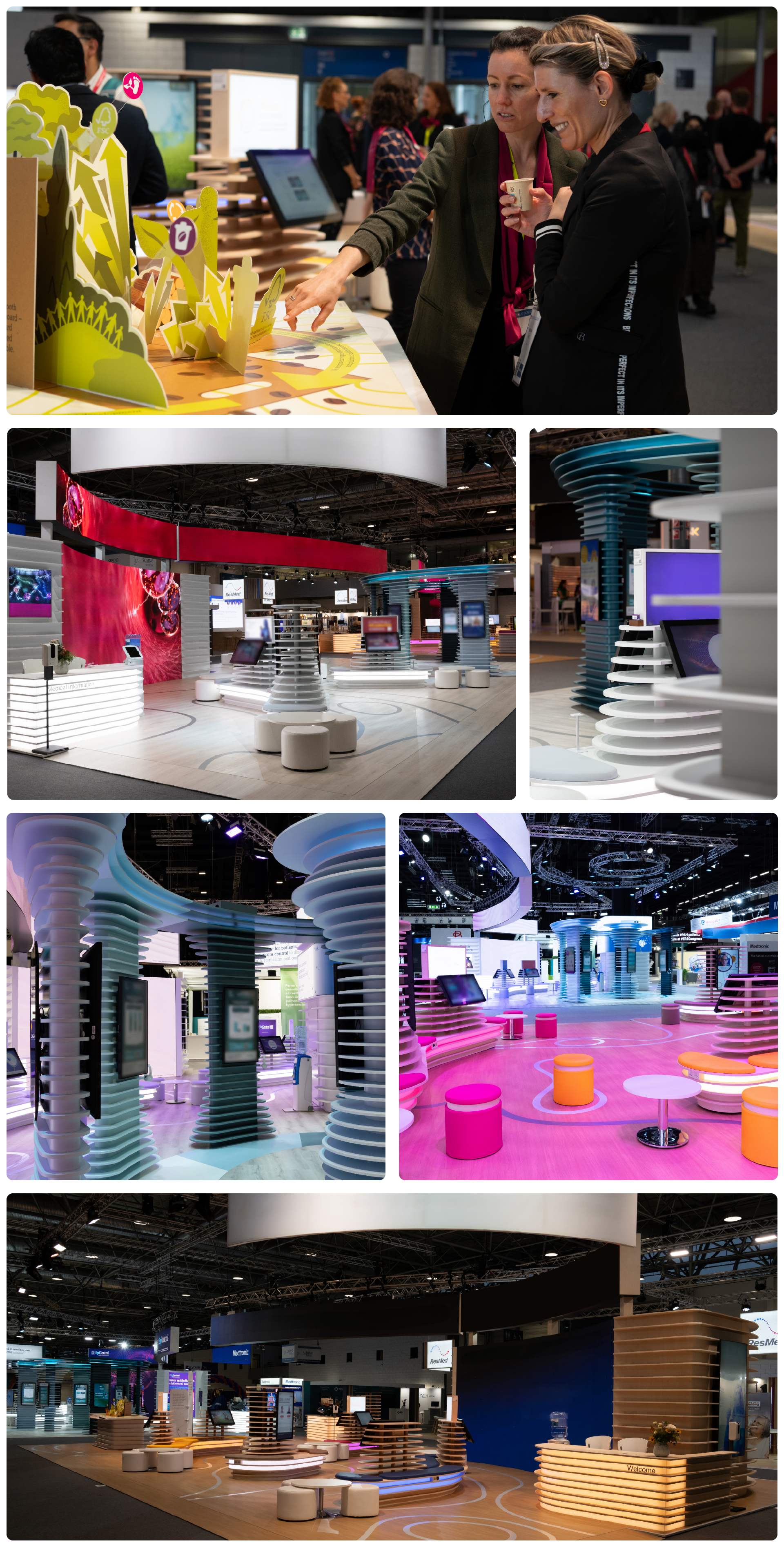
By 2025, the ambition had evolved further. While the booth was completely reimagined to support new objectives and visitor experiences, the sustainability principles that underpinned the previous award-winning stands remained firmly in place.
Sustainability became not only the way the booth was built, but part of the experience itself. Visitors were invited to explore AstraZeneca’s commitment to sustainable healthcare through immersive storytelling, interactive installations and dedicated sustainability content. Behind the scenes, the same principles remained in place: circular design, responsible sourcing, efficient logistics and a focus on material recovery. The project achieved an 82% reduction in production waste, a 56% reduction in production and waste-related carbon emissions, and ensured that 99% of materials were reused, repurposed or recycled following the event.
Importantly, none of this came at the expense of visitor engagement.
One of the most persistent myths in the events industry is that sustainability requires compromise. The ERS programme demonstrates the opposite. Across three years, the booth continued to attract delegates, spark conversations and deliver memorable experiences while significantly reducing environmental impact. The challenge of designing more responsibly became a catalyst for innovation rather than a constraint upon it.
The three consecutive awards also reflect something broader than a successful exhibition stand. They demonstrate the value of long-term collaboration between client, agency and supply partners. Meaningful sustainability outcomes rarely come from a single decision. They emerge from hundreds of decisions made throughout the design, production and delivery process, each one contributing to a shared objective.
As expectations around sustainability continue to grow across the events industry, organisations are increasingly looking for evidence that environmental responsibility and business impact can coexist. The ERS programme provides a practical example of how that can be achieved.
Three consecutive awards are a welcome recognition of that work. More importantly, they demonstrate that sustainable exhibition design is no longer an aspiration or future ambition. It is a proven approach that can deliver measurable environmental benefits, exceptional visitor experiences and lasting value at the same time.
For us, that is the real achievement.