Material matters: how smarter material choices are reshaping exhibition design
Sustainable exhibition design is about more than choosing recyclable materials. Elliot Bairstow explores how smarter material choices, lower-carbon construction and designing for reuse can reduce environmental impact without compromising creativity or experience.
Discover how a more considered approach to materials can help create exhibitions that are built to make an impact and built to last.
Author:
Elliot Bairstow, Sustainability Project Manager, Emota
Ask people what sustainable exhibition design looks like and they’ll probably say “cardboard”. Thanks to our Enviroplan methodology, it’s become synonymous with many of Emota’s sustainable booth designs.
But cardboard is only part of the materials story.
There’s no such thing as a perfect material
The story of a booth starts long before the first visitor steps onto the show floor.
Every panel, graphic, structure and finish has come from somewhere. Raw materials have been extracted, processed, manufactured and transported before eventually finding their way into an exhibition space. Once the event is over, those same materials face another question: what’s next?
This entire journey contributes to what’s known as embodied carbon: the emissions associated with a material throughout its lifecycle.
For an industry built around temporary experiences, this presents a challenge. If materials are used once and discarded, their impact can far outlive the event itself.
It’s tempting to search for a miracle material that solves every sustainability problem. In reality, no such material exists.
Every material comes with strengths, limitations and trade-offs.
The key isn’t finding a perfect material. It’s understanding those trade-offs and selecting the right material for the right application, while still delivering the quality and creativity that clients expect.
That’s a principle that sits at the heart of our Enviroplan approach. Whether it’s reducing embodied carbon, extending the lifespan of exhibition assets, or using materials as part of the visitor experience itself, every material decision has the potential to shape a more sustainable outcome.
The hidden impact of materials
Material choice is often one of the earliest sustainability decisions we make. Recycled content, lightweight construction and lower-carbon manufacturing can all reduce a project’s footprint.
At ERS 2025, our booth concept for AstraZeneca combined a series of lower-impact choices across the entire build, rather than relying on a single “sustainable” material.
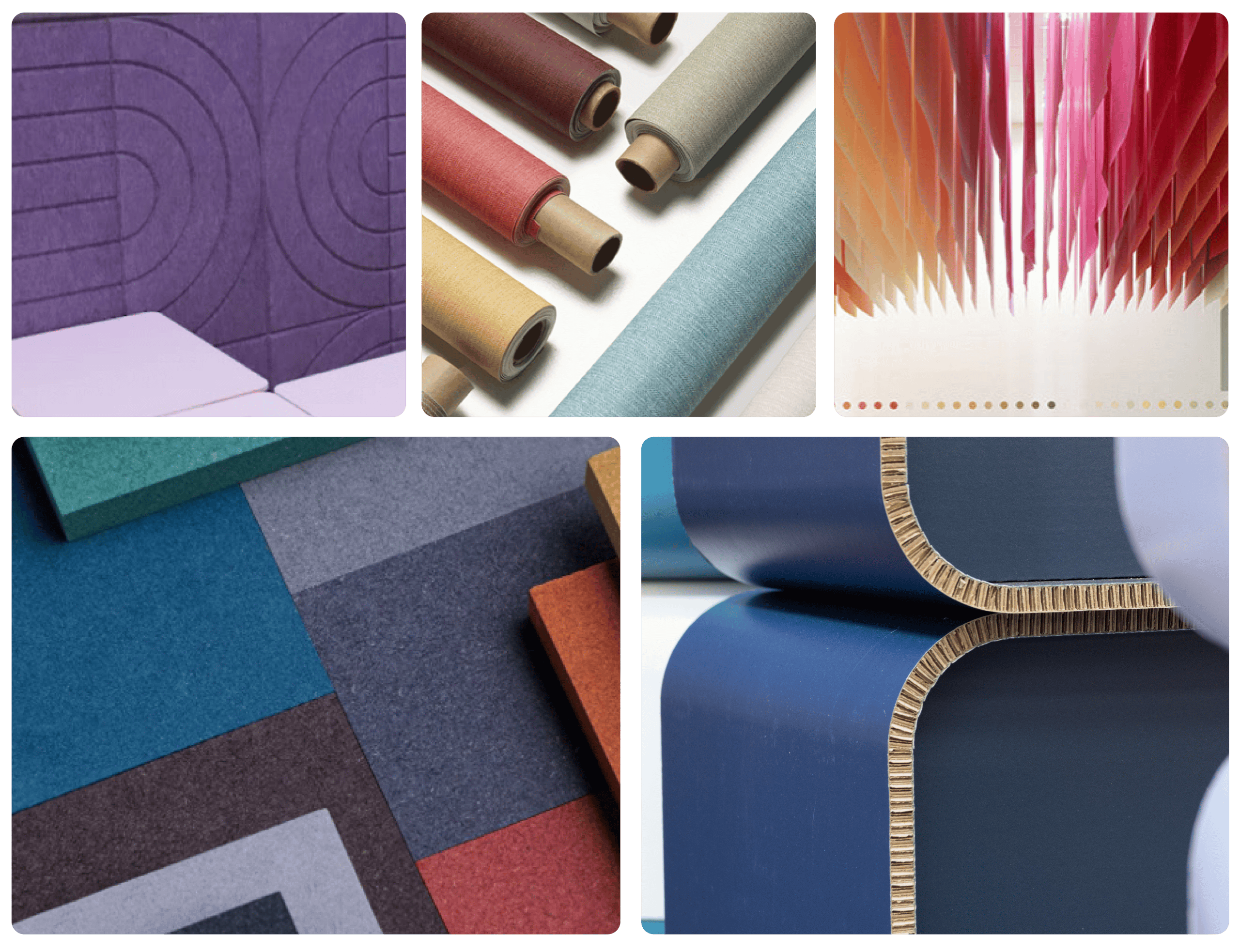
Rigid paperboard, made from FSC-certified fibres, replaced traditional timber laminate structures. It provided a lightweight, fully recyclable alternative that reduced both material and transport emissions.
A fully recyclable paper-based material was used for banner graphics, reducing plastic content while maintaining a high-quality finish. A PVC option typically has 2 to 3 times higher embodied carbon than fibre-based papers.
We selected flooring that was manufactured using renewable energy and incorporated recycled content, with up to 65% lower embodied carbon versus traditional carpet tiles.
Even the floor graphics were reconsidered, with bio-attributed materials chosen to reduce emissions compared with more conventional PVC-based alternatives.
Sustainability extended beyond manufactured materials too, with a four-square-metre living lung installation constructed from locally sourced plants that were donated to community initiatives after the event.
Combined with flat-pack construction and more efficient logistics, these choices contributed to an 82% reduction in production waste and a 58% reduction in production and waste emissions compared with a traditional booth build.
No single decision transformed the project in isolation, but together they created a meaningful reduction in impact before the booth had even reached the exhibition hall. Carbon and waste measurement platforms such as TRACE help us quantify the impact of each decision, allowing teams to compare options and understand the environmental outcomes of different materials, logistics strategies and design choices.

Designing beyond a single event
One of the biggest shifts taking place in exhibition design is a move away from thinking exclusively about the event itself.
Today, material choices are increasingly influenced by what happens after breakdown. Can a material be reused? Can it be reconfigured for another show? Can it be recycled at the end of its life?
These questions are helping to shape a new generation of exhibition materials and design approaches.
At Emota, we often select materials not only for how they perform on day one, but for how they’ll perform after multiple installs, dismantles and journeys around the world.
High-density wood fibre panels coloured all the way through can remain in use for longer because knocks and scratches are less visible. Likewise, flooring systems are increasingly selected for their ability to be lifted, transported and re-laid across multiple events. The same thinking applies to modular architectural systems, where components can be reconfigured for different footprints and event formats rather than rebuilt from scratch.
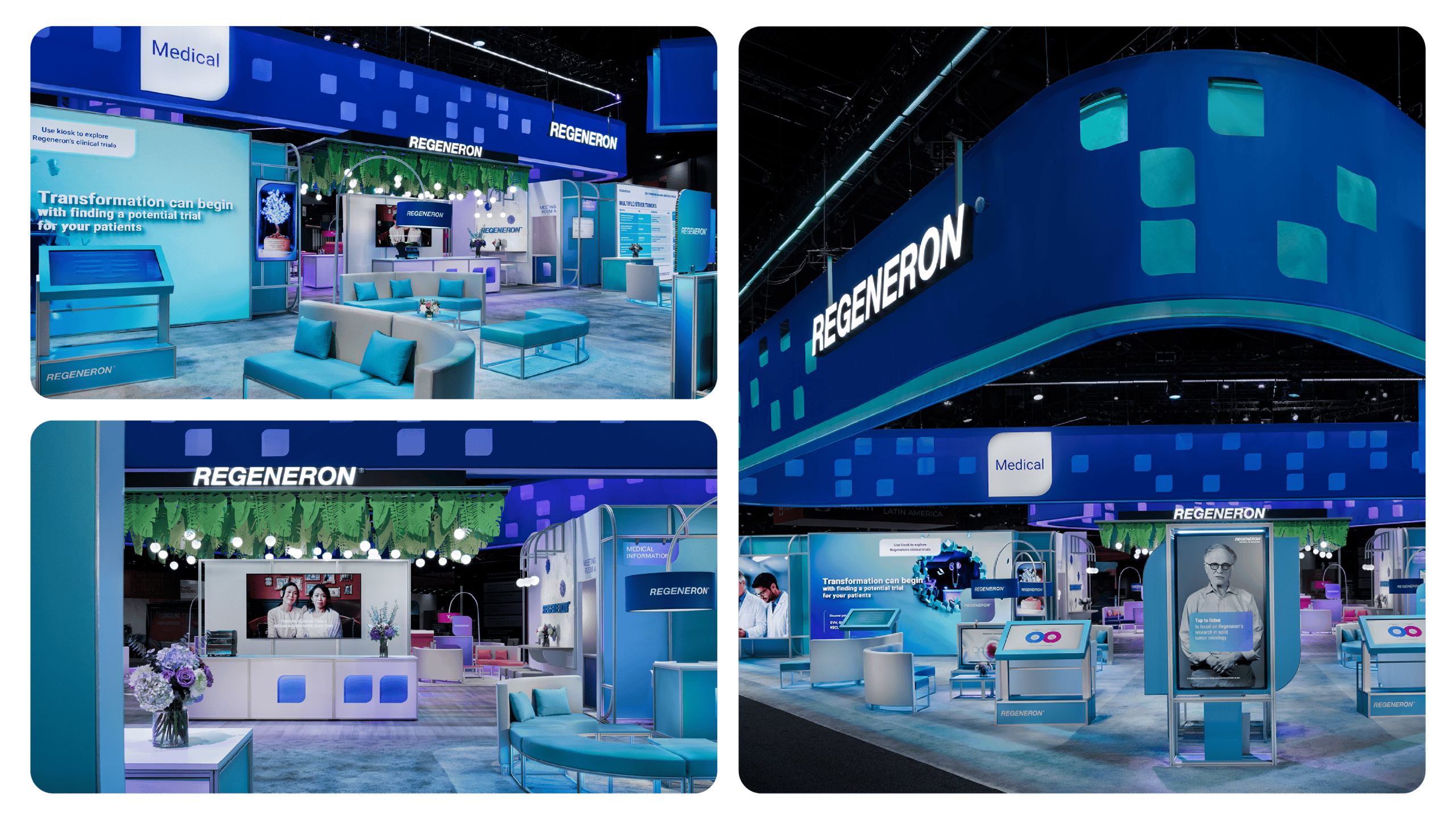
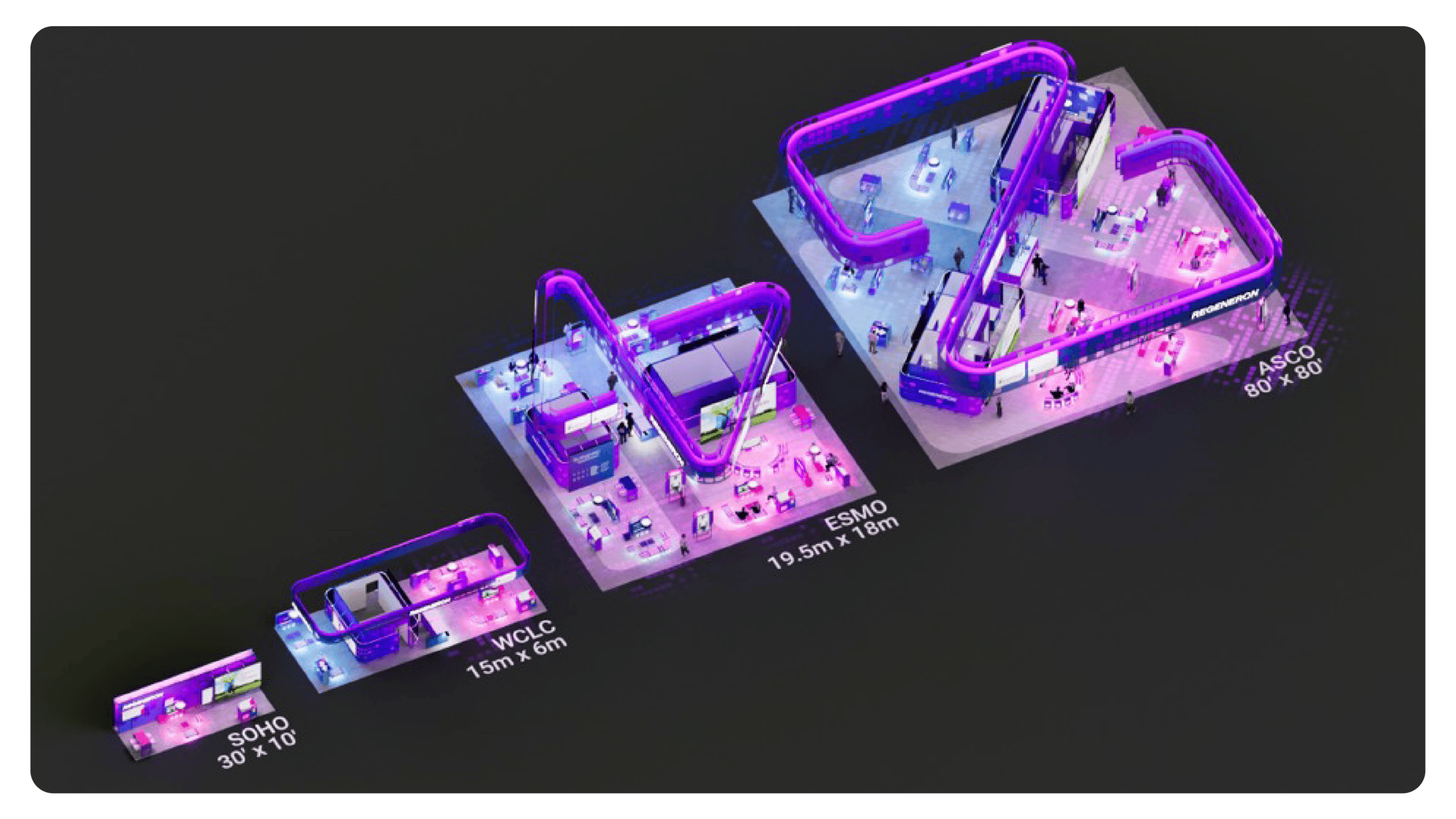
This approach is exemplified by our work with Regeneron. Rather than designing a booth for a single congress, the system was developed to be adapted across multiple therapy areas, congresses and booth footprints.
Lightweight reusable aluminium framing forms the backbone of the design, providing a durable structure that can be repeatedly reconfigured rather than rebuilt. Components such as these are stored centrally between events and redeployed as required, keeping the core system in use, while graphics and softer elements can be refreshed when needed.
In practice, that means fewer materials, fewer new components and less waste generated over time.
This booth was built to be rebuilt.
That long-term approach to reuse also highlights an important reality of sustainable design: some of the best solutions involve trade-offs. Certain laminated wall panels used within the Regeneron system, for example, may not be the simplest materials to recycle. However, because they can be reused repeatedly across several years of events, their overall environmental impact can be significantly lower.
It’s a reminder that sustainable material selection isn’t always straightforward. Sometimes the most responsible choice isn’t the easiest material to recycle, but the one that never needs replacing.
When materials become part of the experience
Historically, sustainable materials were often hidden behind graphics, finishes and cladding.
Today, we’re increasingly taking a different approach.
We have embraced a material mindset: allowing the characteristics of materials to influence the creative direction of the experience rather than treating them as purely technical decisions.
At ASCO 2025, this thinking helped shape AstraZeneca’s presence.
Recycled plastic surfaces introduced distinctive patterns and textures created by the recycled material itself. Meanwhile, felt acoustic panels made from recycled PET added warmth, texture and functionality to the space. Exposed structural elements celebrated the construction of the booth rather than concealing it behind layers of finishing.
Sometimes the most sustainable material choices work quietly in the background. At other times, they’re worth putting centre stage.
At ASCO, sustainability wasn’t just treated as a hidden feature of the design. Dedicated areas showcased the materials and sustainability decisions that shaped the booth. This allowed visitors to engage not only with AstraZeneca’s science, but also with the environmental thinking behind the experience itself.
Rather than compromising creativity, sustainable materials helped shape a distinctive design language built around flexibility, circularity and exploration.
Our goals are materialising
At Emota, material selection isn’t a standalone sustainability exercise. It’s part of the wider thinking behind Enviroplan, our approach to creating exhibition experiences that deliver impact while reducing waste and emissions.
The projects mentioned here demonstrate that there isn’t a single route to more sustainable exhibition design. Reducing embodied carbon, designing for reuse and enhancing the visitor experience aren’t separate objectives. The same material can often contribute to all three at once. Equally, some of the most effective solutions involve balancing competing priorities and making informed trade-offs.
That’s why sustainable exhibition design isn’t about finding the perfect material. It’s about understanding what each material can contribute and using it in the right place, for the right purpose.
Because when material decisions are considered collectively, small choices can add up to meaningful change.