Building trust: The foundation of effective safety leadership in the events industry
The best event safety teams don’t stop great ideas… they help make them possible. Discover why trust, collaboration, and practical risk management are transforming health and safety in live events.
Learn how a partnership approach to event safety creates better experiences for clients, teams, and audiences.
A common misconception of safety is that our primary role is to say “no.” No to an ambitious production element. No to an accelerated schedule. No to a creative idea that pushes boundaries.
The reality is our team is quite the opposite.
The most effective safety team is not barriers to success, but instead a partner in making success possible. Our role is to help teams find a way forward, balancing operational goals with practical risk management.
At the heart of that balance is one critical element: trust.
Trust is what allows us to influence decisions, navigate challenges, and ultimately protect people while ensuring projects are delivered successfully. Building trust starts within our own safety team, expands to our internal partners, and extends all the way to our clients.
Trust starts within the safety team
Shell Eco-Marathon Americas and Shell Eco-Marathon EU
Trust within the safety team is built through consistency, communication, and mutual respect. It means sharing information openly, asking for help when needed, and recognizing that no single person has all the answers. Team members become resources for each other rather than operating in silos, creating a culture where collaboration replaces competition.
In the fast-paced environment of Shell Eco-Marathon, our team will often work under tight timelines, changing weather conditions, and high-pressure environments. Successful arrivals, race days, and departures of the participants depends on knowing that your teammates are willing to support each other when challenges arise. Through warm (hot) weather, heavy rain, and even an occasional tornado, our team works collaboratively, and with a smile.
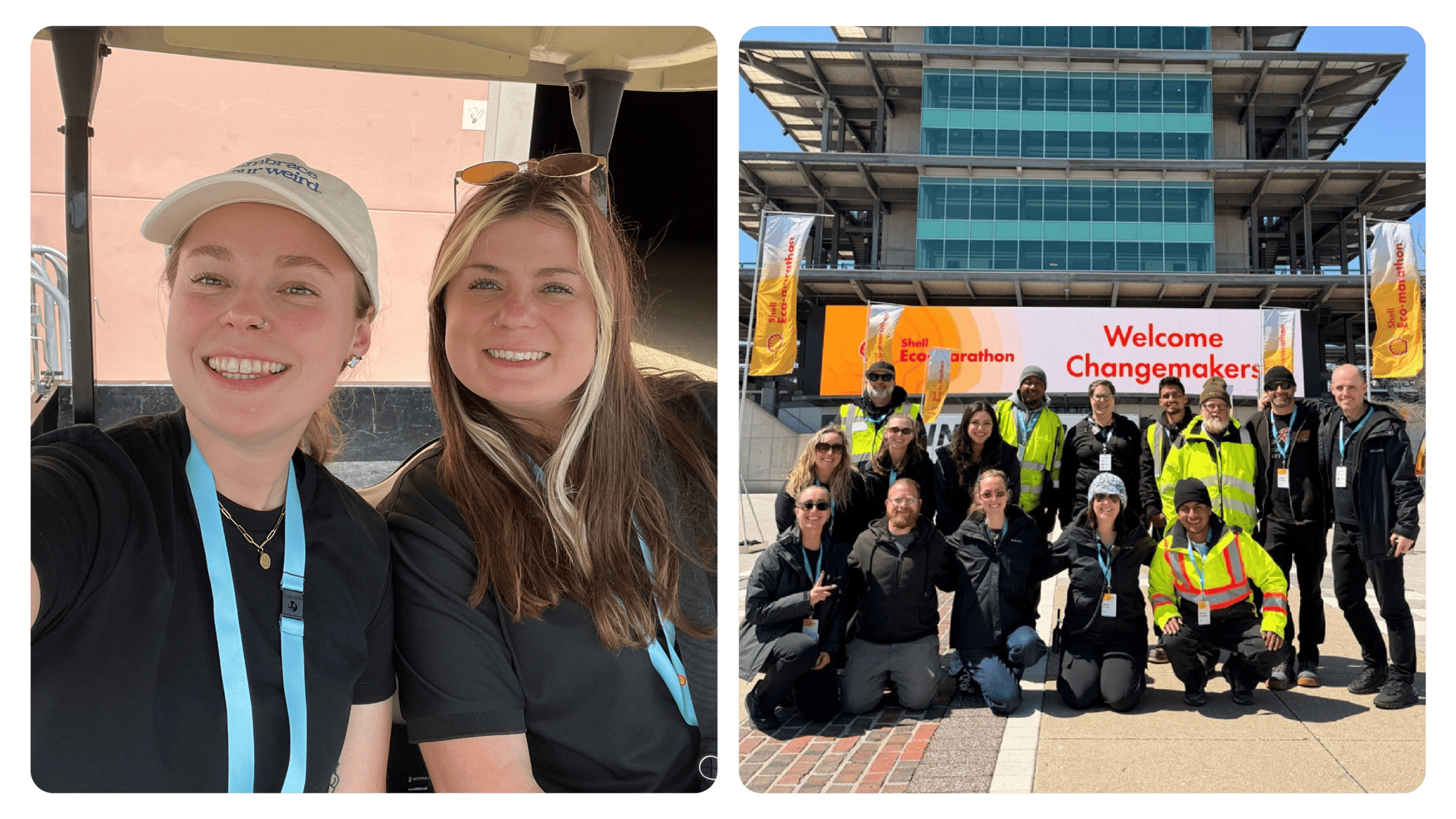
Pictured: Sarah Meredith and Heather Pople both advisors on the safety team from SEM- EU(IMG_01). SEM Americas team, including Matt Graham, Head of Safety, Haley Schupp, Health & Safety Manager, and Allie Doremus, Health & Safety Coordinator.
Building partnerships with internal teams
RevImpact for Revolution Medicines
In our role, the safety team interacts with a wide range of internal and external project teams: Production, Environments, Meetings and Events, Client Engagement, Operations, labor crews, AV vendors, caterers, and venue staff (just to name a few). Each group has its own priorities, pressures, and deadlines.
One of the fastest ways to lose trust is to approach these relationships from a purely compliance-driven perspective. Instead, trust is built when safety becomes integrated into project planning from the beginning and isn’t afraid to “get dirty.”
In RevImpact for Revolution Medicines, we knew we had a strict timeline that would only allow us a few hours to erect an outdoor tent on the town’s business square. From early safety team involvement in the project, and through collaboration, our team was able to adhere to the logistical realities of an outdoor event to ensure safety offered solutions that are practical, not theoretical.
The solution? A build that started at midnight with safety, event production, and our labor crews onsite. We were able to work overnight, split shifts, and effectively manage fatigue through proper breaks ahead of the live event phase.
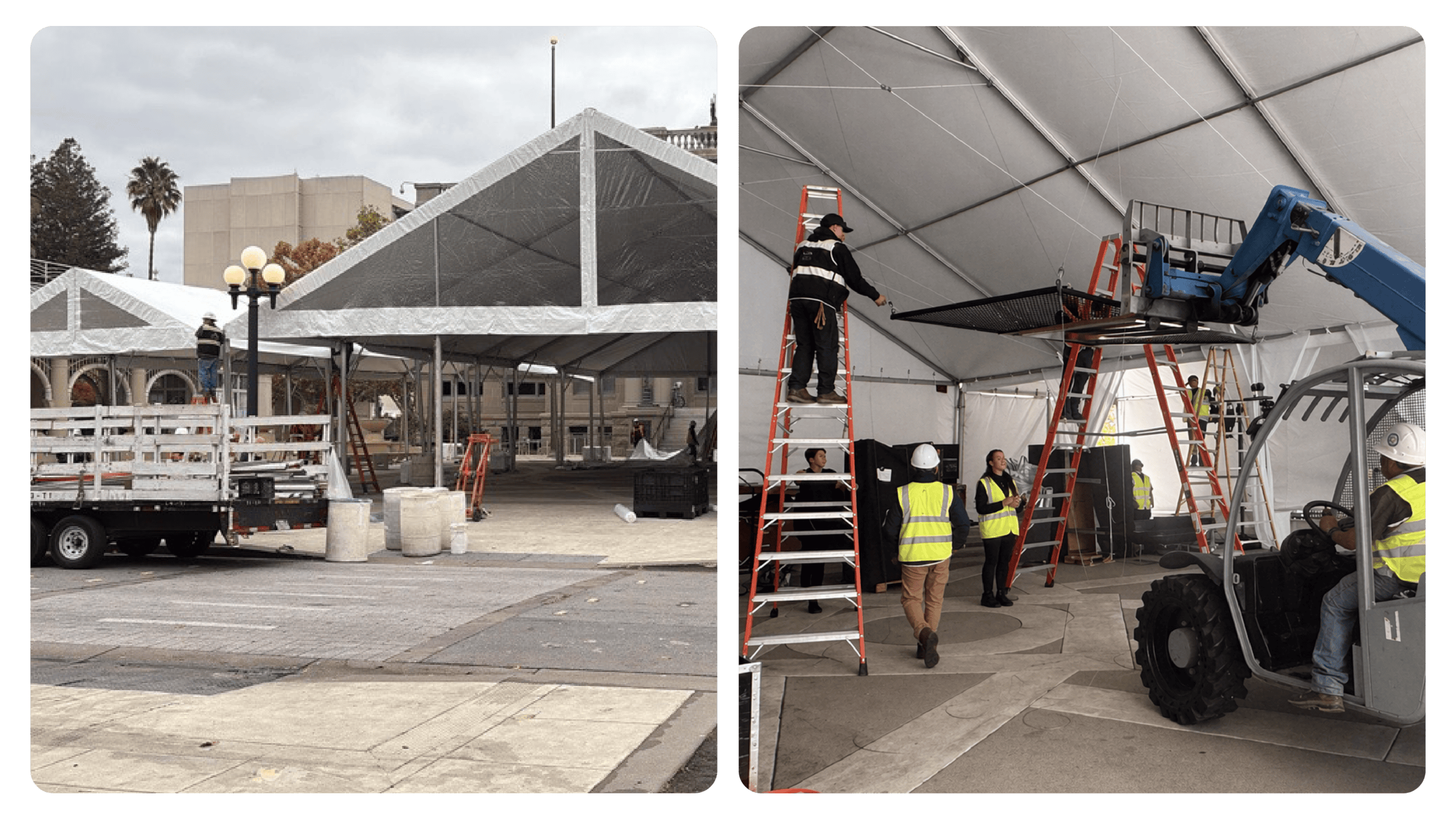
Pictured: RevImpact tent structure in progress.
And when things got a bit rainy? The team pivoted to ensure everyone could enjoy the outdoor tent structure and indoor theater with Emota team on standby with umbrellas.
Thankfully, by the time our reception started, the clouds broke and everyone was able to enjoy the event nearly rain-free.
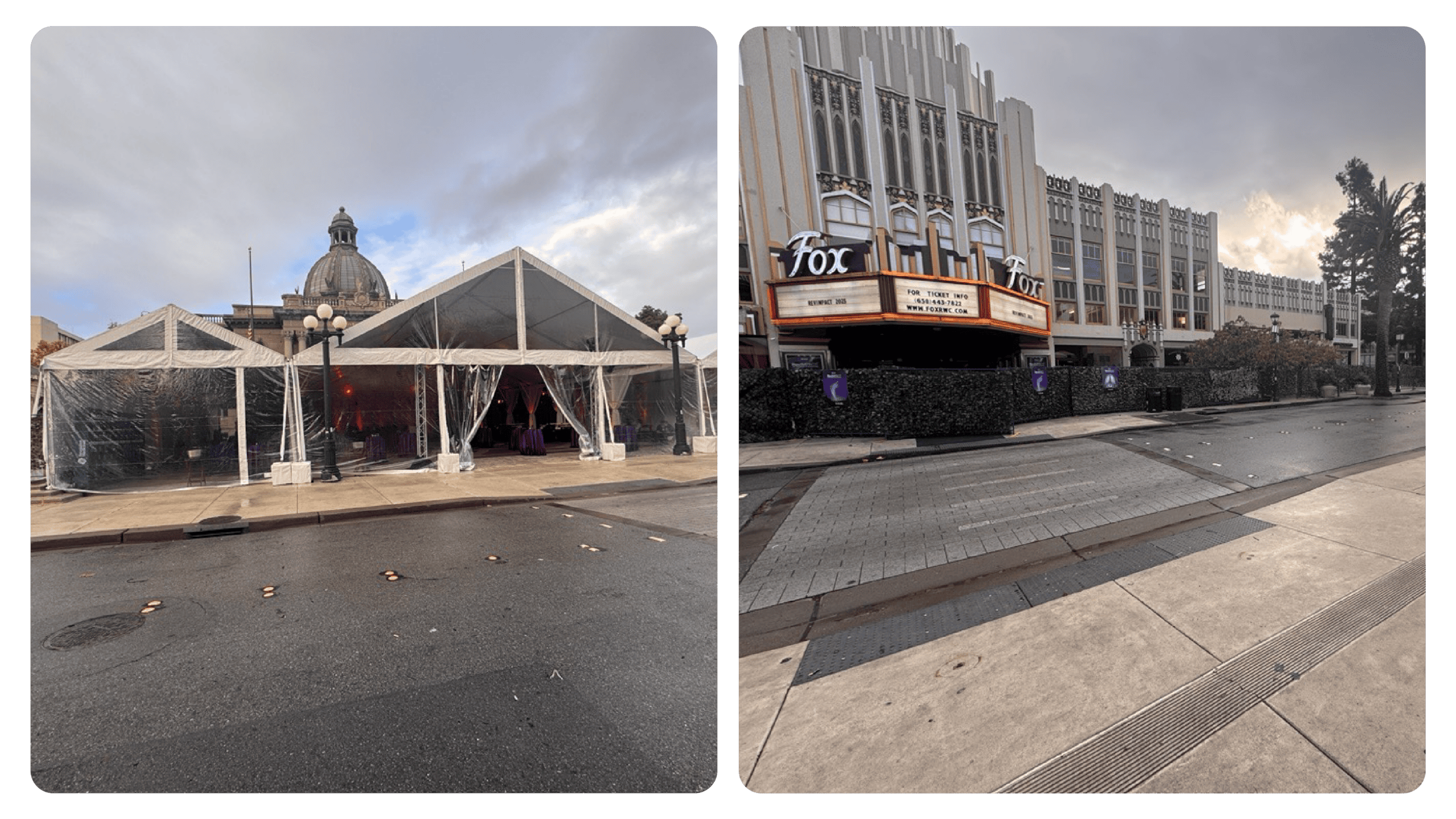
Pictured: Fox Theater and RevImpact tent structure prior to the reception.
Strengthening our relationships with clients
Shell’s National Mobility and Convenience Summit – Canada
The final, and often most visible, layer of trust is the relationship between safety and clients. Clients rely on our project teams at Emota to deliver exceptional experiences. While safety may not always be the first thing they think about, it quickly becomes one of the most important factors influencing project success if something goes wrong.
Our partnership with our clients at Shell on National Mobility and Convenience Summit – Canada showed how our safety team remain calm under pressure, adapt to changing circumstances, and found practical ways to achieve project goals without compromising wellbeing. With another tight timeline, freight needed to arrive exactly on time, but with the everchanging Canadian winter weather, some freight was delayed, some arrived early. All while our team took to keeping the sidewalks clear of ice and snow.
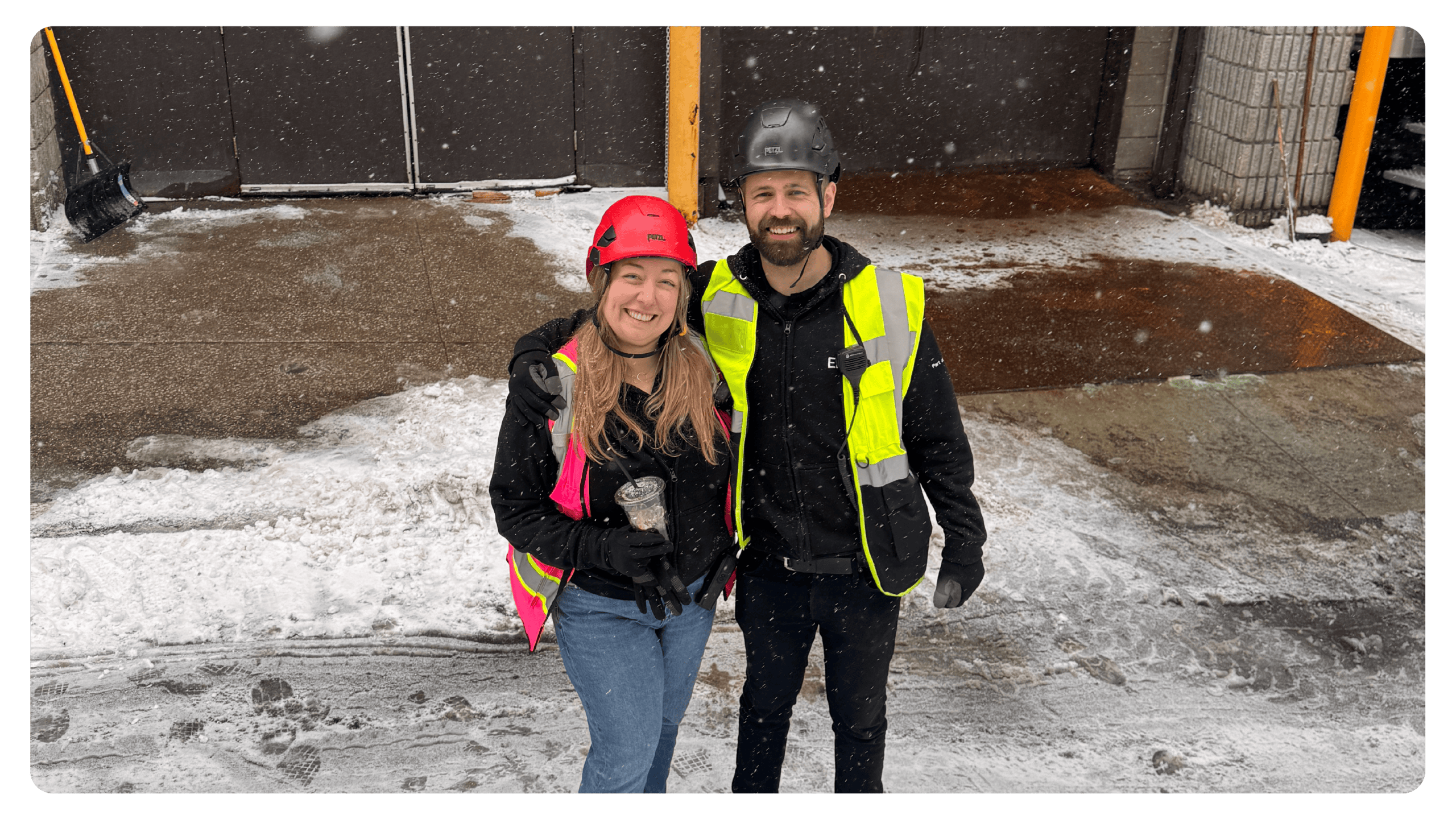
Pictured: Haley Schupp, Health & Safety Manager, and Kieran Petre, Senior Advisor, taking an iced-coffee break from shoveling the snow and ice.
Clients need confidence that safety advisors understand the risks associated with the project, but our clients also need assurance that safety will not unnecessarily hinder progress. To combat this notion, our team works as a strategic partner rather than an administrative requirement.
Through open communication with the onsite Production team, onsite safety team, and our clients at Shell, we were able to safely adjust our schedule and demonstrate that consistent safety and operational success can coexist. Allowing us to build long-term credibility that safety is a value-added service that contributes directly to project success.
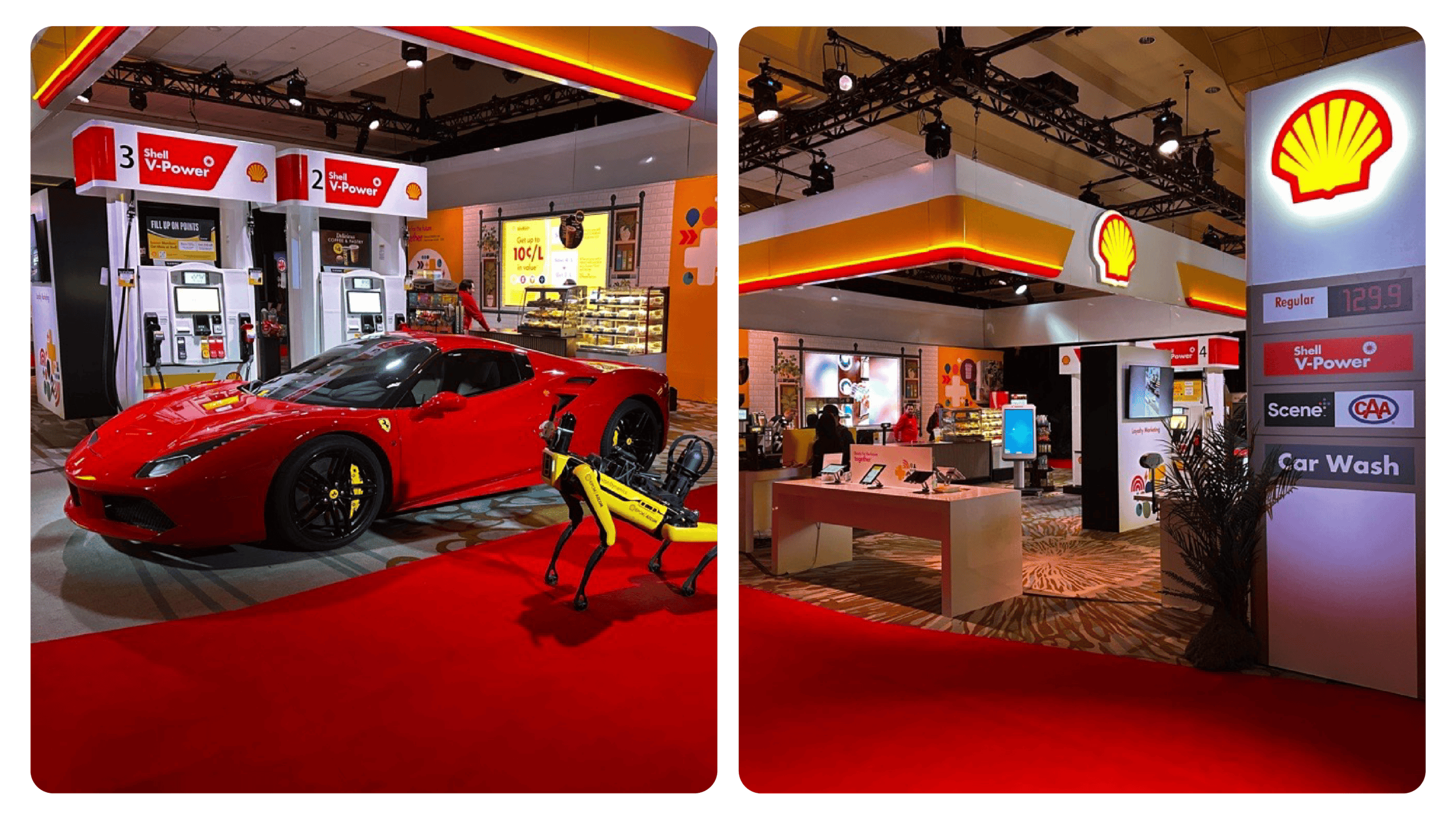
Pictured: Completed experience Floor of Shell’s National Mobility and Convenience Summit – Canada.
Trust creates influence
In every event, there are countless decisions that impact safety. The ability to influence those decisions rarely comes from authority alone. It comes from relationships.
In an industry built on delivering extraordinary experiences, trust is one of the most powerful tools a safety advisor can have. It enables honest conversations, strengthens partnerships, and creates the conditions for both safety and success to thrive.